
Last updated November 14, 2026
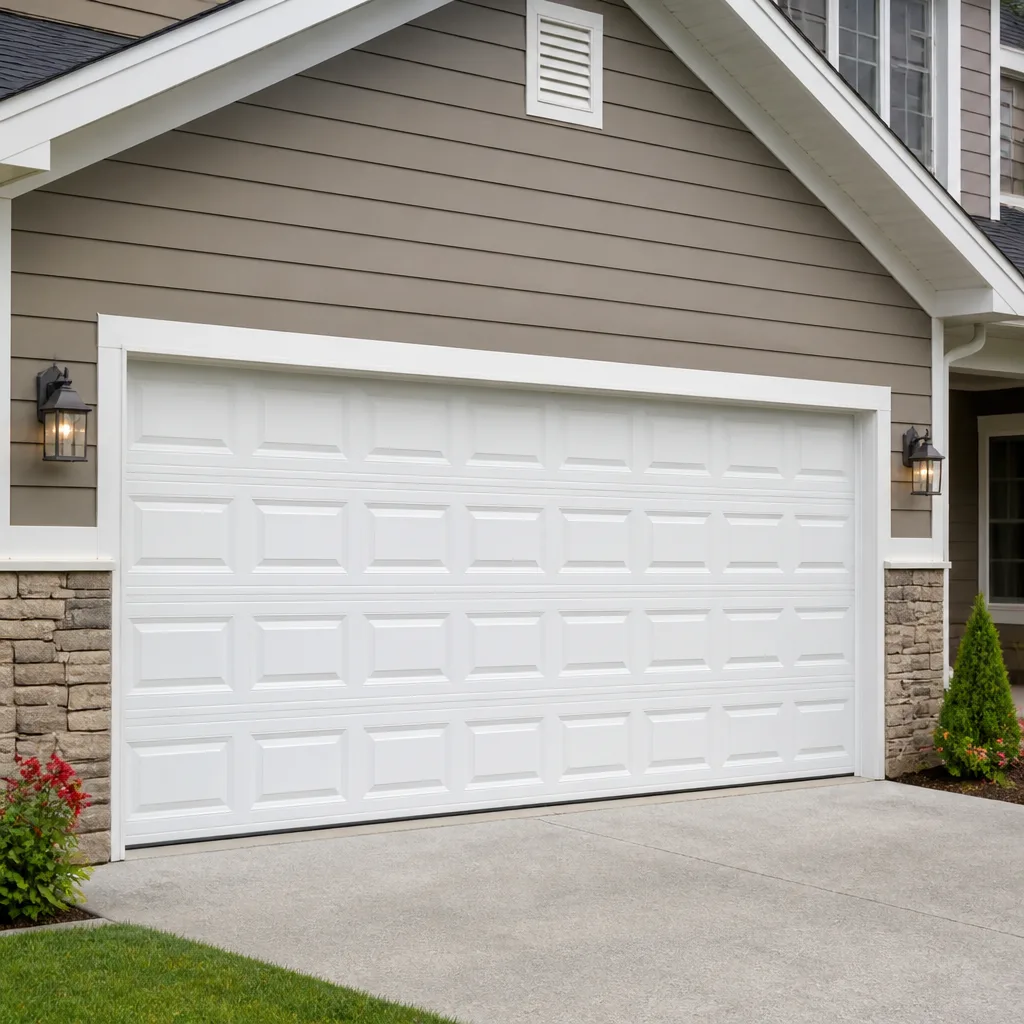 Raised-panel steel
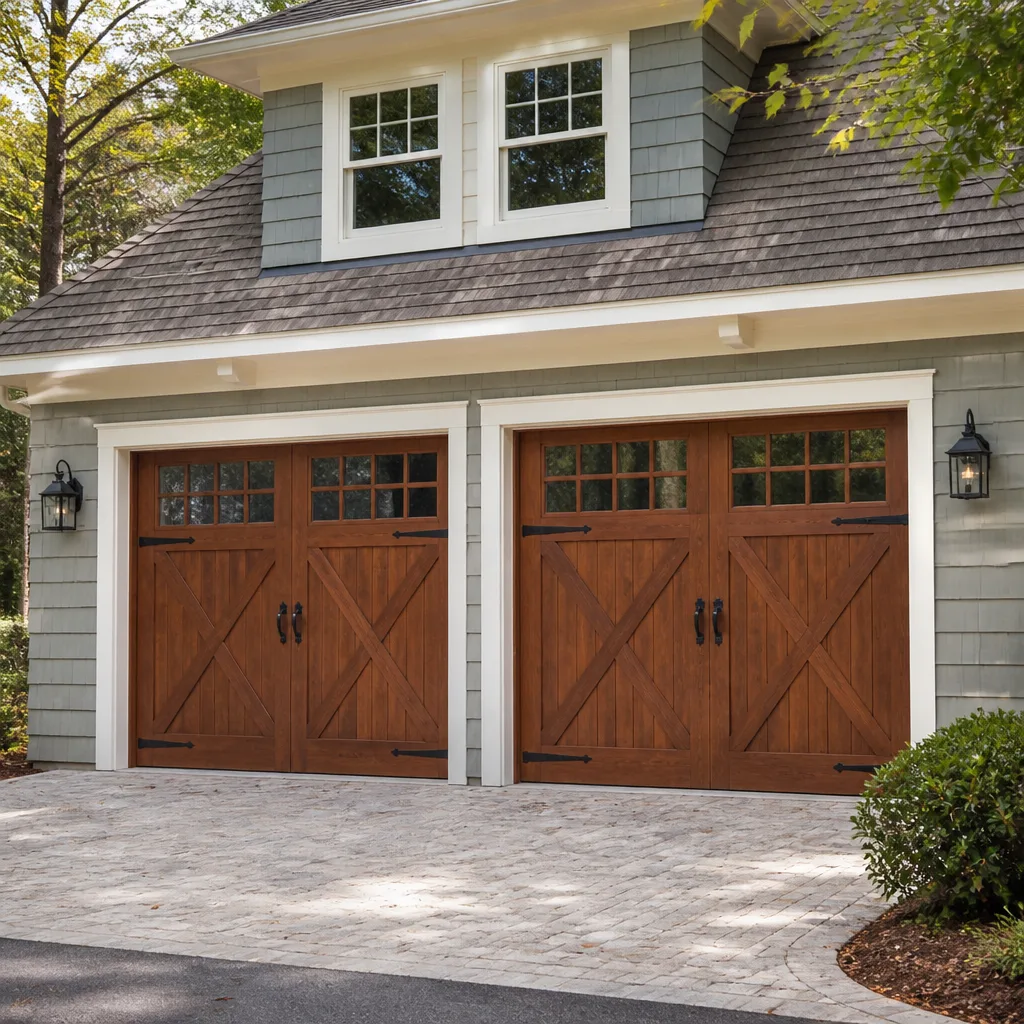 Carriage house
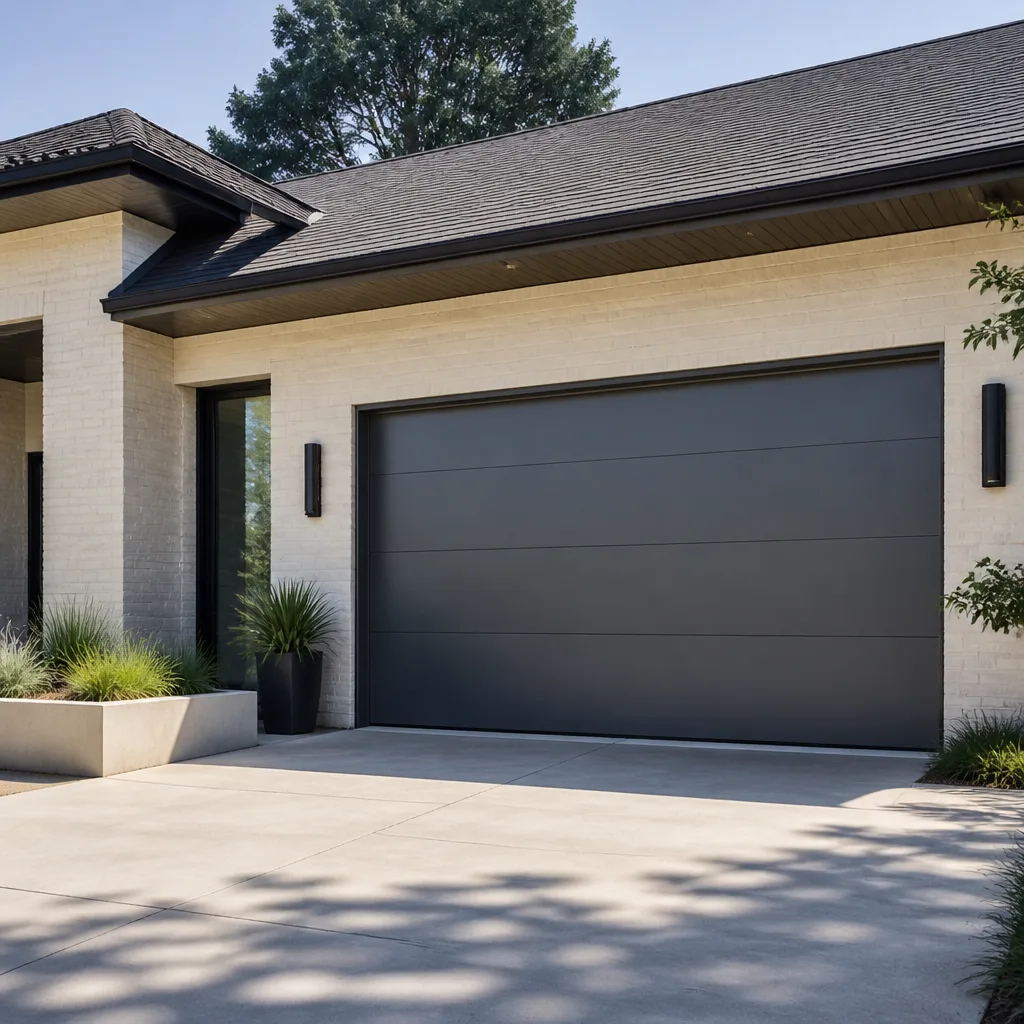 Modern flush
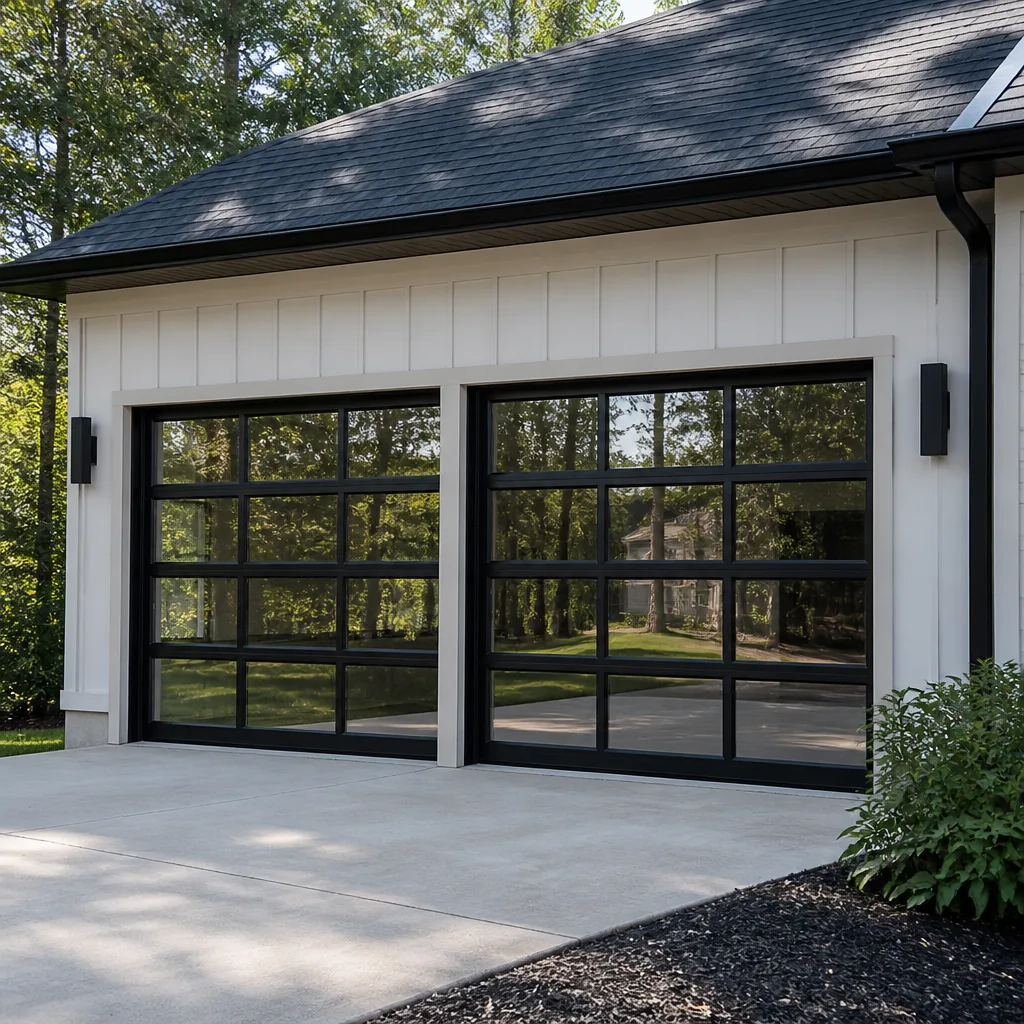 Full-view glass
 LiftMaster openers
 Chamberlain openers
Full 25-point door and opener safety check with every visit - springs, cables, rollers, tracks, and your LiftMaster or Chamberlain opener included
You get a price before we start. It does not change when the pro arrives.
Get your free estimateGarage Door Warning Signs: A Cary Homeowner’s Reference Guide
A garage door that hesitates for two seconds before it opens isn’t “getting old.” It’s almost always a specific, diagnosable problem – a failing opener capacitor or slack spring tension – and both have a predictable failure timeline measured in weeks, not years. That gap between a quirk worth watching and a problem that will leave your car trapped is exactly where homeowners guess wrong. In this guide, we sort every common garage door symptom into three tiers: fix today, fix this month, and monitor and schedule. You’ll learn what each noise actually means, why a slightly crooked door points to a cable rather than a track, and how to describe a problem clearly when you call for help. Cary drivers pull their cars into garages every evening, and knowing what’s normal from what’s about to fail changes how the whole week goes.
Quick Answer
Garage door warning signs fall into three urgency tiers. Fix today: the door won’t close, reverses on its own, hangs crooked, or you hear a loud pop followed by a dead door – those point to cables, springs, or opener faults that can injure someone or leave you locked in. Fix this month: grinding, slow opening, sluggish remotes, or a door that opens partway. Monitor and schedule: light squeaks, minor vibration, and worn weatherstripping that can wait for a planned visit. Any noise paired with visible deformation or a door that moves unevenly is a stop and call – not a wait-and-see.
Styles & brands we work with
- Raised-panel steel
- Carriage house
- Modern flush
- Full-view glass
- LiftMaster openers
- Chamberlain openers
Table of Contents
- The Three-Tier Urgency System for Every Symptom
- What Your Garage Door’s Noises Are Telling You
- Why a Crooked Door Is Usually a Cable Problem
- Opener Behavior Flags and What Each One Means
- Visual Warning Signs Homeowners Misread
- How Cary’s Seasons Stress Your Door and Opener
- How to Document a Symptom Before You Call
- What You’ll Pay to Fix Common Problems in Cary
The Three-Tier Urgency System for Every Symptom
Most warning-sign lists just tell you what could go wrong. That’s not useful when your car is on one side of a stuck door. What actually matters is sorting each symptom by how fast it needs attention, so you know whether to call now or jot it on the calendar. Here’s how we categorize every symptom we hear about from Cary homeowners.
Tier 1 – Fix today. These are the symptoms where something has already failed or is about to. The door won’t close and keeps reversing, the door hangs visibly crooked, you hear a loud pop from the torsion bar, or the door drops a few inches after you lift it partway. Call and book a same-day repair when you can – and remember that fast dispatch runs from 7am to 7pm, so a morning call usually gets eyes on it the same day.
Tier 2 – Fix this month. The door still works, but it’s telling you a component is worn. Grinding through the whole cycle, sluggish opening, a remote that only works from a few feet away, or the door stopping partway and reversing without anything in its path. You have a few weeks, but the failure could land at an inconvenient moment. Book a planned repair.
Tier 3 – Monitor and schedule. Light squeaking, minor vibration, weatherstripping that’s cracked but still keeping rain out, and a door that’s slightly noisier than it was last year. These are safe to watch and fold into a regular service visit. Hinges dry out, rollers wear, and seals stiffen – none of that strands your car.
One rule sits above all three tiers: any noise with visible deformation, or a door that moves unevenly, moves up to Tier 1 regardless of how small it seems. Torsion springs and cables carry a lot of stored tension, so a door that has shifted out of alignment is not something to test yourself. Our technicians have up to 10 years of experience with exactly this kind of failure, and we can tell you from the photo alone whether it’s safe to keep using the door until we arrive.
What Your Garage Door’s Noises Are Telling You
Sound is the fastest diagnostic tool you have, and most homeowners hear four distinct noises without ever separating them. Each one points at a different component, which is why telling us “it’s making a noise” clips a technician’s ability to help. Here’s what each one usually means.
- Grinding. Metal-on-metal contact. Usually worn rollers or a dry torsion bar, though it can also mean a bent track scraping a roller. If it’s continuous through the whole travel, get it checked – grinding accelerates as the wear gets worse.
- Squealing. Grinding’s squeakier cousin. Often the rollers or hinges crying out for lubrication, or a torsion spring that’s dry. Squealing is usually the cheapest problem on this list to fix, but it can turn into grinding if ignored.
- Popping. The one that stops a homeowner in their tracks. A loud pop often means a torsion spring has snapped, or a cable has jumped its drum. Stop using the door and call for a same-day repair. This is the noise most often followed by a door that won’t move at all.
- Rattling. Loose bolts, worn bushings, a track pulling away from the wall, or a door panel that’s coming out of its hinge. Usually a fix-this-month problem, but worth a look if it’s new.
Here in Cary, spring failure is the most common cause of popping, especially on doors that live on south- and west-facing garages where the afternoon sun does the most work. Springs cycle thousands of times a year, and the failure is predictable: tension builds over weeks of hesitation before the pop. If your door has been hesitating before opening, that’s the sound-track equivalent of a warning shot.
Why a Crooked Door Is Usually a Cable Problem
A slightly crooked door is not a track problem – or at least not usually. When a door rises unevenly, with one side ahead of the other, the first thing to suspect is a cable. Cables run from the bottom corners of the door up to the drums at the top, and when one slackens, frays, or jumps its drum, that side stops pulling. The door then twists as it rises. Track damage usually comes later, as the crooked door scrapes the rails on its way up.
The reason this distinction matters is urgency. A track that needs a realignment is a fix-this-month problem. A cable that’s about to fail is a fix-today problem, because a snapped cable lets the door drop, and a door dropping on a person or a car is how real injuries happen. If you see any of these, treat it as Tier 1:
- The door sits visibly lower on one side when fully closed.
- One side of the door rises ahead of the other by more than an inch.
- A cable looks frayed, kinked, or has come off its drum.
- The door makes a twanging or slapping sound when it opens.
- You can see daylight through the gap on one side between the door and the frame.
If you spot any of the above, don’t try to force the door and don’t reach for the cable. Cables carry serious tension, and the safe thing to do is stop using the door and call for a same-day repair. This is a job for a trained technician, not a homeowner with a wrench. Our garage door repair service handles this exact situation most weeks in Cary – the cable gets re-seated or replaced, and the track gets checked while we’re there.
Opener Behavior Flags and What Each One Means
Homeowners tend to lump every opener problem into “the opener is broken.” But slow response, partial opening, and auto-reversing without an obstruction each point at completely different root causes – and each needs a different repair. Knowing which flag you’re seeing makes the difference between a fast, accurate fix and a technician guessing.
The opener responds slowly or not at all
A sluggish response – the motor starts a beat late or the door jerks as it begins to move – usually points at the opener’s control board or a capacitor that’s lost its punch. It’s often the leading sign that the opener is aging out, and it’s worth a diagnostic visit sooner rather than later. If your opener is a LiftMaster or Chamberlain, the diagnostic is one we run constantly.
The door only opens partway
A partial opening is usually a limit-switch or travel-setting issue. The opener doesn’t know where the open position should be, so it stops early. Sometimes it’s the opener, sometimes it’s the door’s balance, and a tech has to look at both to tell them apart.
The door reverses without an obstruction
If the door comes back down immediately after you close it, with nothing in its path, the safety sensors are misaligned or dirty, or the opener’s force setting is wrong. This is a fix-today item because the door can’t be relied on to close, and a house is only secure when the door actually latches. A quick cleaning of the sensors at the base of the tracks often solves it, but if it doesn’t, call us.
Every modern opener from Genie, Chamberlain, and LiftMaster is repairable when the electronics fail. We work on the brand you already have and won’t steer you toward a new unit when a control board or sensor realignment will do. If the opener is genuinely at the end of its life, we’ll tell you plainly. That’s part of why garage door opener repair is one of our most common calls in Cary – openers age differently from doors, and the two parts need separate diagnoses.
Visual Warning Signs Homeowners Misread
Most garage door problems give you something to see before they give you something to hear. But several of the most telling visual warnings get misread by homeowners, usually because the wrong part of the door gets the blame. Here are the ones we correct most often.
- “The door looks off-center.” Usually a cable issue, not track damage. The track bends after a crooked door has been rising crooked for a while, so by the time you notice, the cable was the problem and the track is the casualty. Check the cable first.
- “The panels have a slight gap at the top.” Could be a bad bottom seal, a sagging panel, or a spring that’s lost tension. If the door closes with a wedge of light showing along the top or bottom, we can diagnose it from a photo.
- “The hinges look rusty.” They might be – but a rusty hinge on the inside of the door is usually normal wear. A rusty hinge paired with a door that shrieks when it opens is a lubrication and hardware issue and a fix-this-month problem.
- “The springs look fine.” Torsion springs at the top of the door are hidden behind the shaft and often look perfect even when they’re winding down. The hesitation-before-opening behavior is the more reliable indicator.
- “The bottom seal is just old.” A cracked seal isn’t urgent, but it lets rain, leaves, and Cary’s summer heat straight under the door. It’s a monitor-and-schedule item, not a fix-today one.
One more visual to check while you’re near the door: look at the track the roller rides in. If the door is running smooth and quiet but the track has a visible kink, you’re catching it early. If the track is bent and the door is lurching, you’re already at Tier 1. Either way, this is what we mean by a plan: a quick once-over of the door and tracks once a season catches most of these before they become a real expense.
How Cary’s Seasons Stress Your Door and Opener
Cary runs a warm, humid spring and summer and a cooler, wetter winter than most homeowners realize. That combination is hard on garage door hardware in specific ways – and it’s part of why we see certain symptoms cluster at certain times of year.
In summer, the humidity does the most work. Wood components expand and contract, metal parts that sit dry take on a film, and the lubricant you applied in spring can thin under heat. Torsion springs in particular work harder in the months when the door cycles most. If you hear grinding or squealing appear mid-summer, that’s usually the top-of-door bearing plates or the torsion bar asking for attention. In winter, the cold stiffens the door’s seals and can make an older opener’s response feel sluggish. That sluggishness is more likely a tired opener part than a cold-weather quirk.
Beyond weather, Cary’s newer neighborhoods tend to have a mix of builder-standard openers across most homes – Genie units and builder-brand doors command a big share of the market. In older neighborhoods closer to downtown, you’ll find more Raynor and older Chamberlain openers still plugging along. Knowing the brand matters because parts and service procedures vary. It’s not an aging issue; it’s a matter of knowing the specific model installed on the house.
One seasonal habit we suggest to Cary homeowners: at the end of each fall, stand in the garage and listen to a full up-and-down cycle. Any hesitation, squeal, or uneven travel you hear then will get worse through the winter. Most of the repair bills we see could have been caught at that one check.
How to Document a Symptom Before You Call
The single thing you can do to get a useful estimate instead of a wasted trip is to describe your garage door problem accurately over the phone. Technicians diagnose from patterns, and a homeowner who can name the tier, the sound, and the timing gets a call scheduled sooner and a better first guess. Here’s the sequence we ask every caller to run through.
- Confirm the door’s condition. Is the door currently up, down, or stuck partway? Don’t move it to check – just observe.
- Try the opener once, and only once. If it responds normally, note it. If it hesitates, stops partway, or reverses without anything in its path, stop and call us.
- Name the sound. Grinding, squealing, popping, or rattling. That single word narrows down the likely culprit.
- Look at the door’s alignment. Is it even on both sides? Does one side lead?
- Photograph the door from the inside. A photo of the whole door, plus one of the springs and the track, helps us confirm the brand and condition.
- Note the opener brand and model. LiftMaster, Chamberlain, Genie, or Raynor – whoever made the opener. The model number is usually on a sticker under the light cover.
- Describe when it started. Was it after a storm, after the door was manually opened, or steadily over days?
Write down what you observe before you call (855) 360-7403. When you describe it accurately, we can tell you in the same conversation whether the problem is a fix-today case or something that can wait for a scheduled visit. Our technicians have up to 10 years of experience working with exactly these door and opener types. And if you’re not sure whether it’s even a repair or just normal wear, describe it anyway – we’d rather answer a question than miss a safety issue.
What You’ll Pay to Fix Common Problems in Cary
Most common garage door repairs in the Cary area fall into a few predictable tiers, and knowing the typical ranges stops a surprise. Here’s the breakdown by symptom, with typical estimated costs. A written estimate always confirms the final price before any work begins.
- Routine tune-up, lube, and safety check: typically $90 – $180.
- Roller or hinge replacement: typically $120 – $250 depending on the number of pieces.
- Cable repair or replacement: typically $150 – $300 per cable.
- Single torsion spring replacement: typically $200 – $340 for one spring. A matched pair is almost always replaced together, so a pair runs roughly twice that.
- Opener repair or sensor realignment: typically $150 – $350, depending on the part.
- Track realignment: typically $150 – $300.
Two things to note. First, all of these are estimates – the written quote you get after we see the door is the price that’s charged, and it’s set before any work starts. Second, the price you see is the price for the visit, not a service call charge stacked on top. Emergency or same-day work doesn’t cost more than a scheduled visit on these kinds of repairs; the price is set by the problem, not the clock. When you call to book, have your photo and symptom notes ready: Cary Garage Door Service is the whole-system team that can fix the mechanic door and the electronic opener in one visit, so there’s no second call to a different specialist.
Common Mistakes to Avoid
- Assuming a slow door needs a new opener. Many slow or sluggish openers just need a capacitor or limit-switch fix. Replacing the whole unit before the diagnosis is the most expensive mistake on this list.
- Giving it “a few more weeks.” On a failing cable or spring, a few more weeks is often the point where a fix-today problem becomes a safety hazard. The pop at 7am doesn’t wait for a convenient weekend.
- Testing the door by hand after a snag. Lifting or forcing a door that has jumped a cable is the fastest way to get hurt. If the door has stalled, call and describe it instead.
- Blaming the track for a crooked door. As covered above, the cable is usually the culprit and the track is the bystander. A technician leads with the cable.
- Ignoring the opener’s model sticker. When you call, the brand and model number is what a technician uses to know which parts to check. “It’s a Genie” is far more useful than “it’s the motor.”
- Skipping the seasonal check after a wet winter. The freeze-thaw cycle in Cary loosens hardware and tightens dry tracks. A quick look in the spring catches the small stuff before it becomes a repair.
- Letting a stuck door stay stuck. A door that won’t close leaves the house unsecured and most of your car’s stuff exposed. If it won’t latch, treat it as an urgent call – even if the garage is full of boxes instead of a car.
See the difference
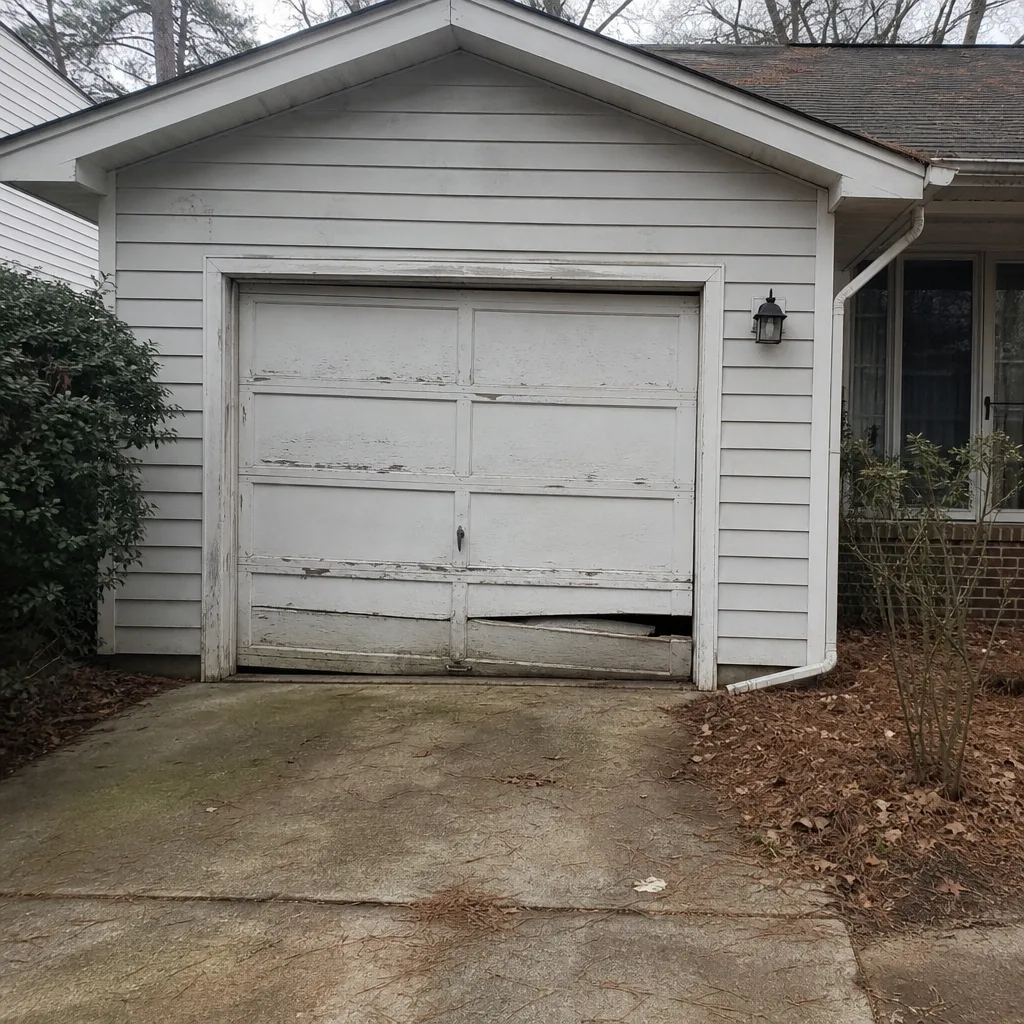 Before
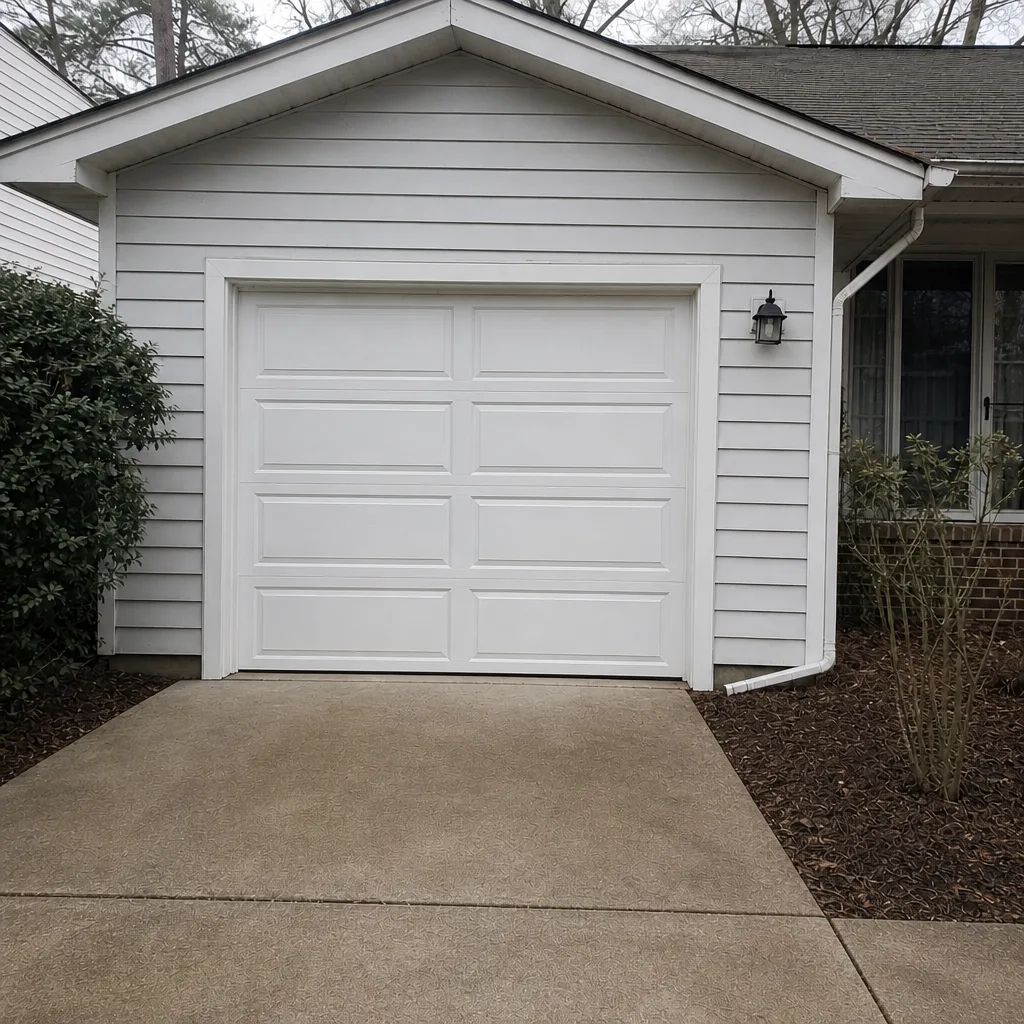 After
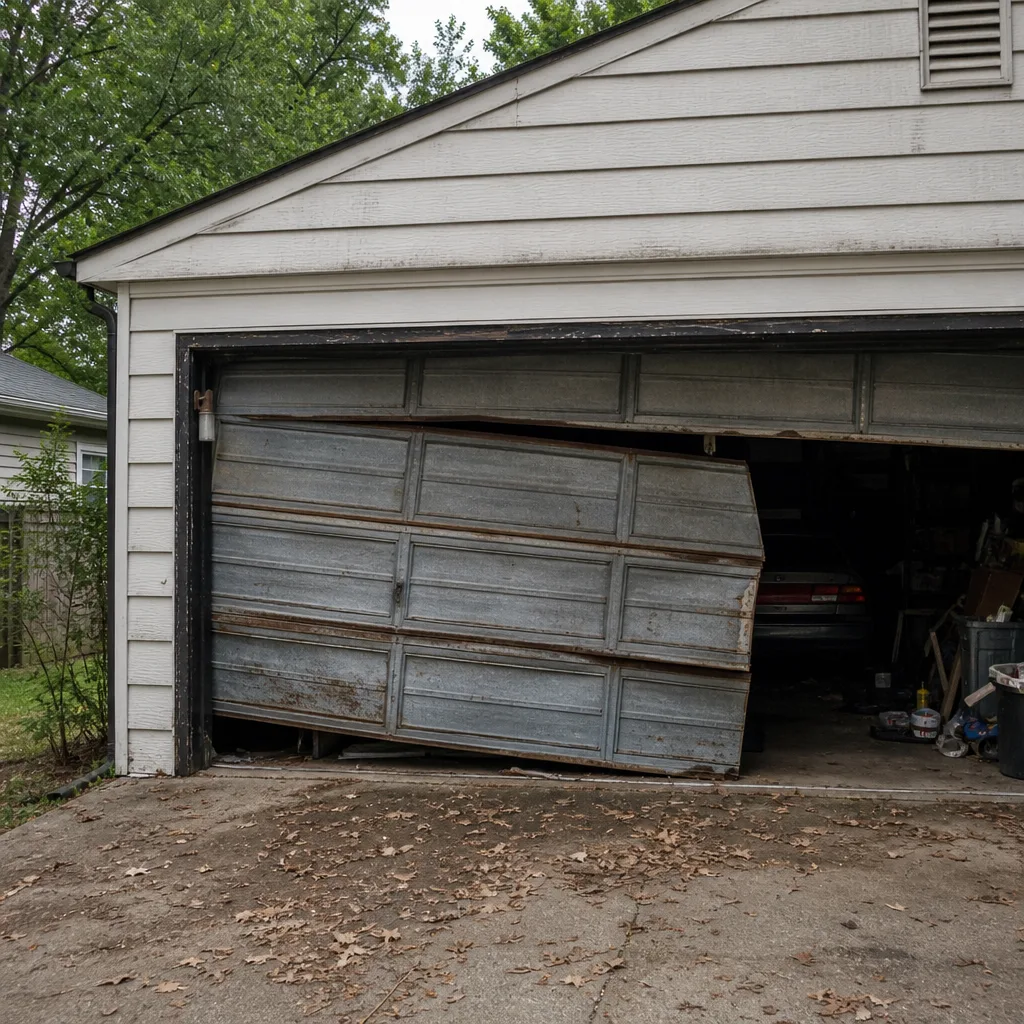 Before
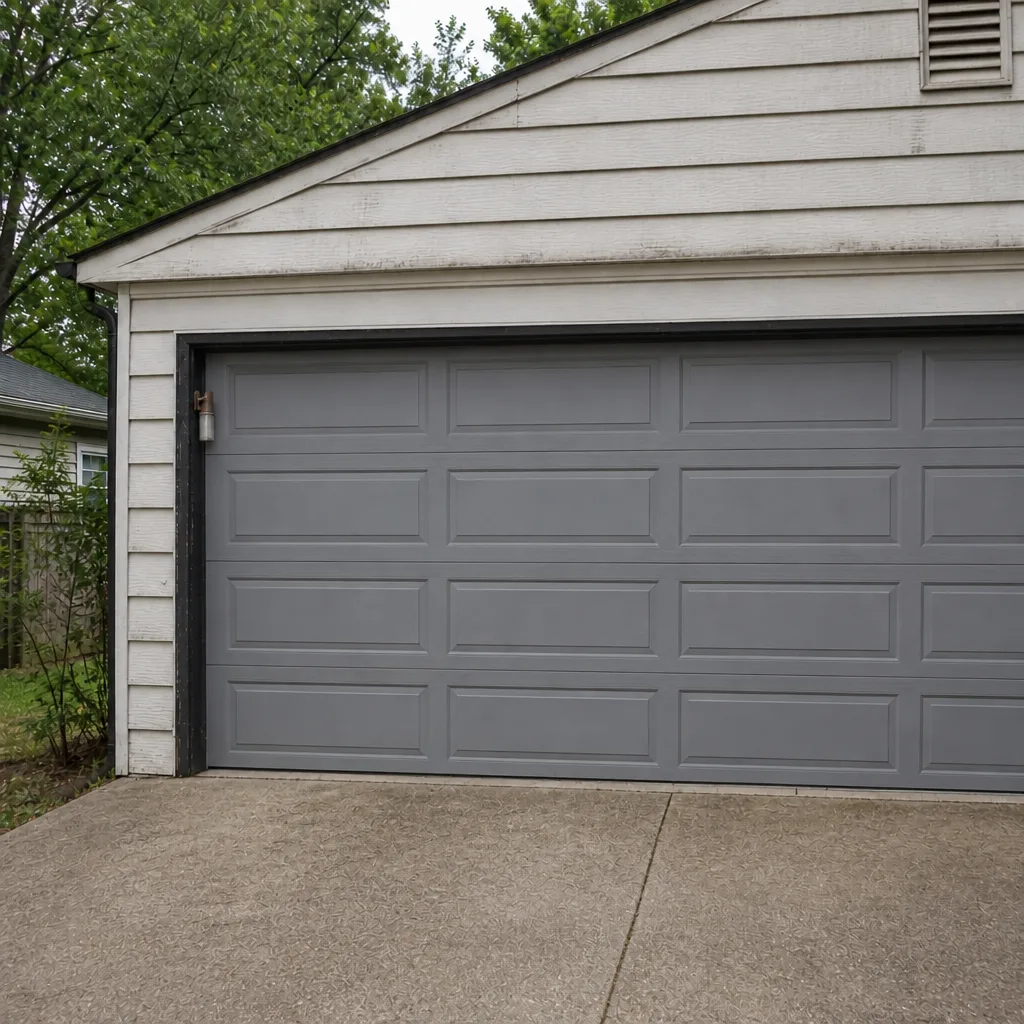 After
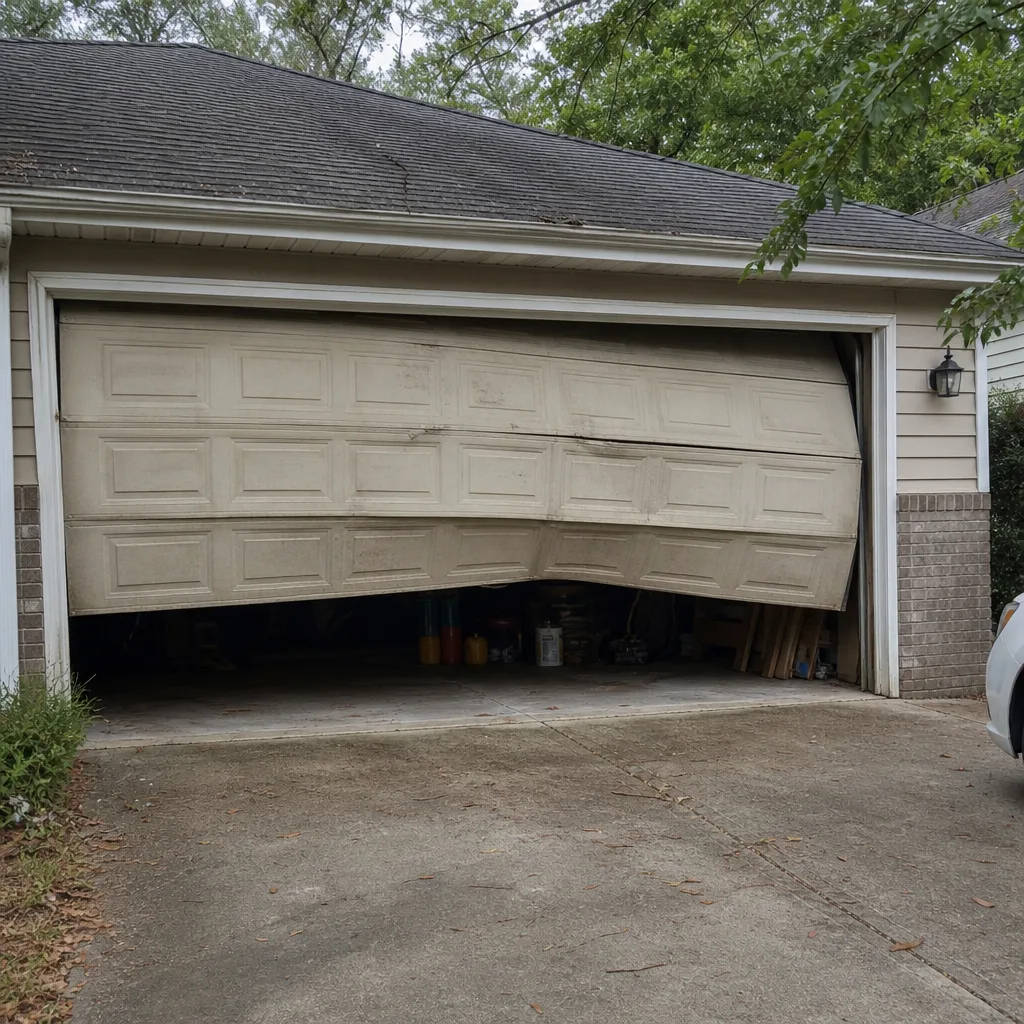 Before
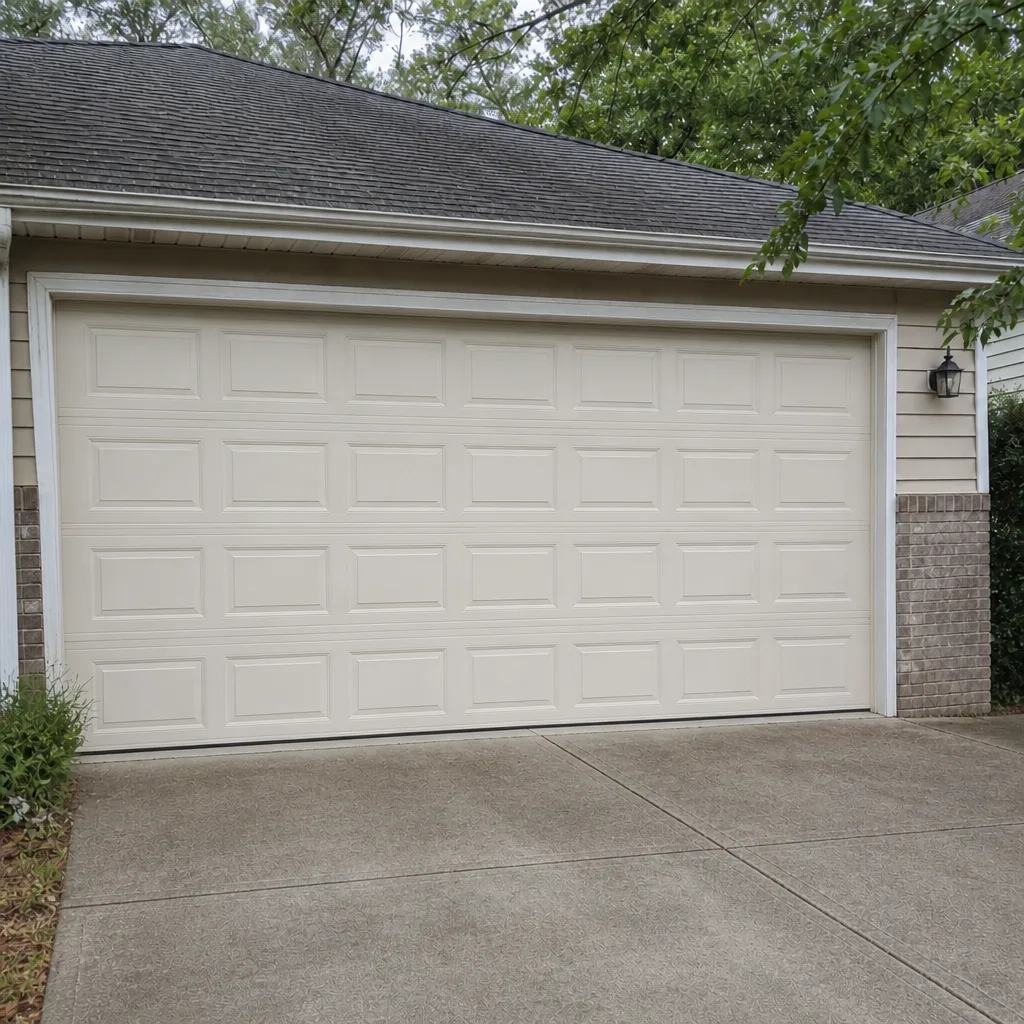 After
When to Call a Professional
Call for a professional if you hear a popping sound from the door, the door hangs crooked or drops on one side, the door reverses without obstruction, or the opener only opens partway. Also call if a frayed cable or bent track is visible, or a spring is clearly broken. All of these are safety issues, and none are do-it-yourself territory – torsion springs and cables carry heavy stored tension, and the tracks are one drop away from a real hazard. Anything with visible deformation or a door that moves unevenly is a same-day call, not a weekend project. Cary Garage Door Service offers free estimates in Cary – call (855) 360-7403. We work on the brand you already have, whether that’s a Chamberlain, Genie, LiftMaster, or Raynor, and we diagnose before we replace.
Frequently Asked Questions
If the door hangs crooked, reverses on its own, won’t close, or makes a loud pop, it’s a fix-today problem. If it grinds or opens slowly but still works, it’s fix-this-month. If it just squeaks, it can wait for a scheduled visit. When in doubt, call (855) 360-7403 – we can usually tell you on the phone which tier your symptom falls into.
No – a crooked door usually means a cable or spring issue, and those carry tension that can cause serious injury. Don’t force the door or reach for the cable. Stop using the door and book a same-day repair. A technician will confirm whether it’s the cable, the spring, or the track before any work begins.
A partial opening almost always points to a limit-switch or travel-setting problem on the opener, though a door balance issue can cause the same symptom. It’s a fix-this-month problem unless the door can’t close at all. Have the opener’s brand and model ready when you call so we can diagnose it accurately.
A popping sound often means a torsion spring has snapped or a cable has jumped its drum. Stop using the door and call for same-day repair. The most common reason we see popping in Cary is a torsion spring failure, and it usually follows a period where the door was hesitating before it opened.
Yes – the cooler months can stiffen the door’s seals and make older opener parts feel sluggish, but it’s usually a case of revealing an existing problem, not causing a new one. If a sluggish door stays sluggish after the weather warms, get it checked. That’s a fix-this-month case, not a fix-today one.
Most common repairs run about $120 to $350, and a single torsion spring replacement typically costs $200 to $340 for one spring – a matched pair is roughly twice that. The written estimate you get after we see the door is the final price, set before any work starts. Call (855) 360-7403 for an exact quote – estimates are free.
The Bottom Line
A warning sign is only useful if you know how to read it. The whole point of the three-tier system is to move you from “I’ll deal with that later” to either a scheduled visit or a same-day call. Grinding, squealing, and rattling are usually fix-this-month problems. Crooked doors, popping sounds, and doors that reverse without obstruction are fix-today problems. As a homeowner in Cary, the best habit is a quick listen once a season and an honest phone call when something sounds different than last time. We work on the brand you already have, and we’d rather diagnose a small issue than wait for a big one.
Contact Cary Garage Door Service
Call (855) 360-7403 for a free estimate. We answer 24/7. Fast dispatch from 7am to 7pm, Sunday through Friday. Whether it’s a stuck door, a struggling opener, or just a symptom you can’t pin down, describe what you’re hearing and seeing and we’ll tell you what’s likely going on and how soon it should be looked at. One call covers both the door and the opener – no need to chase down a second specialist.
Written by the team at Cary Garage Door Service.