
Last updated November 14, 2026
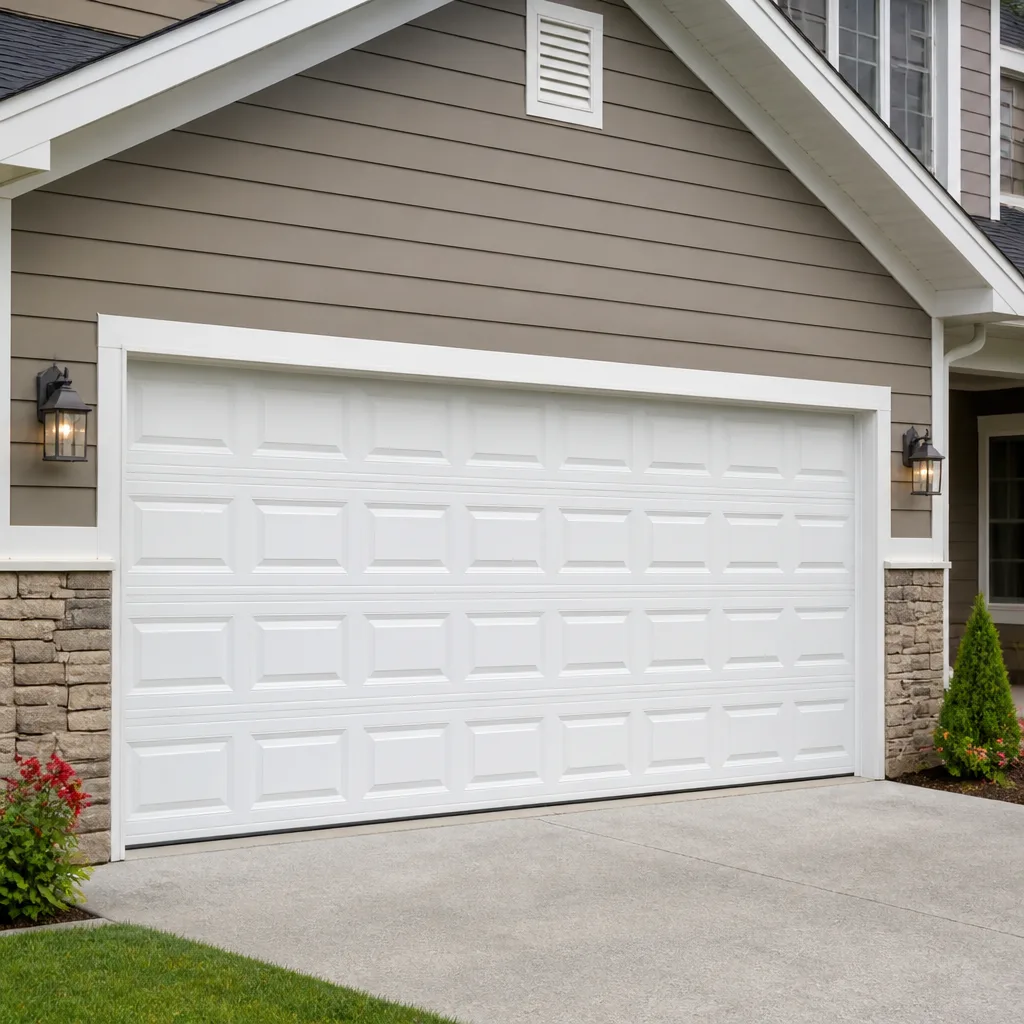 Raised-panel steel
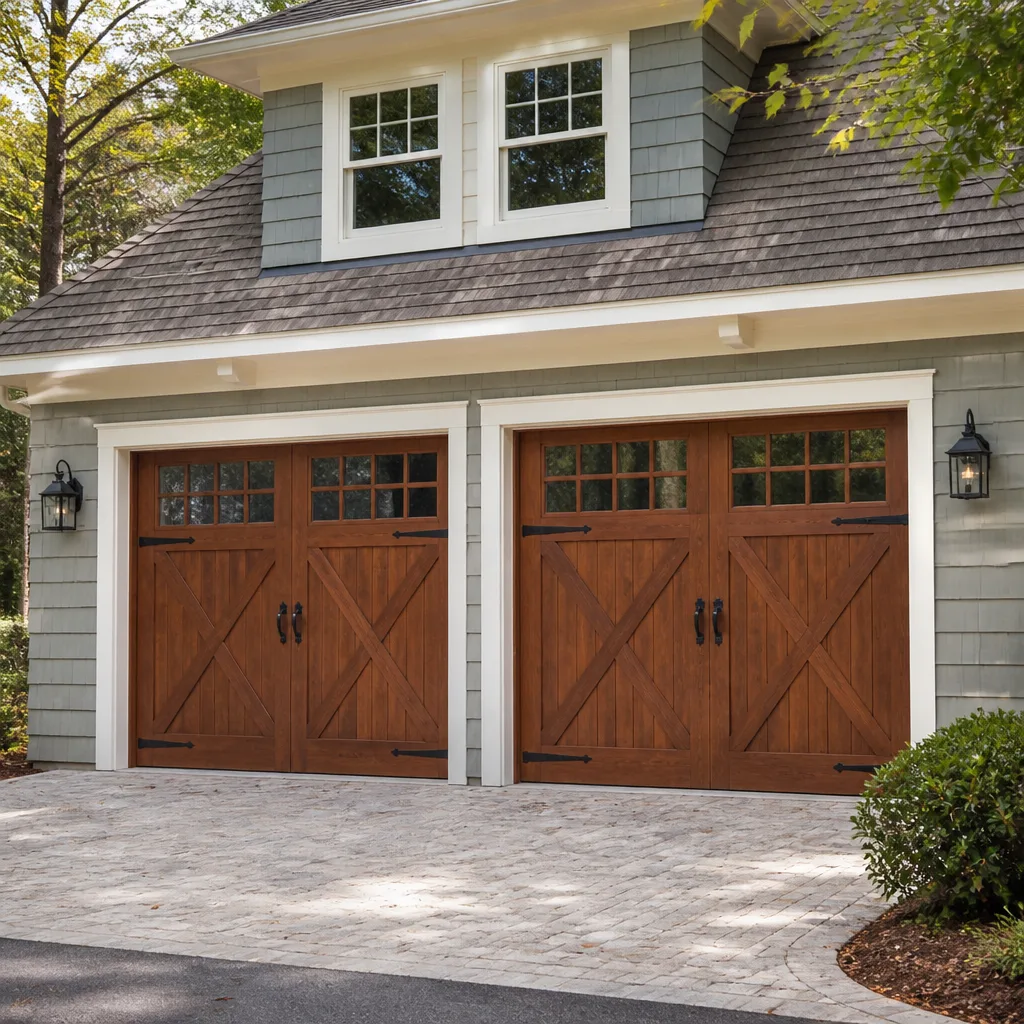 Carriage house
 Modern flush
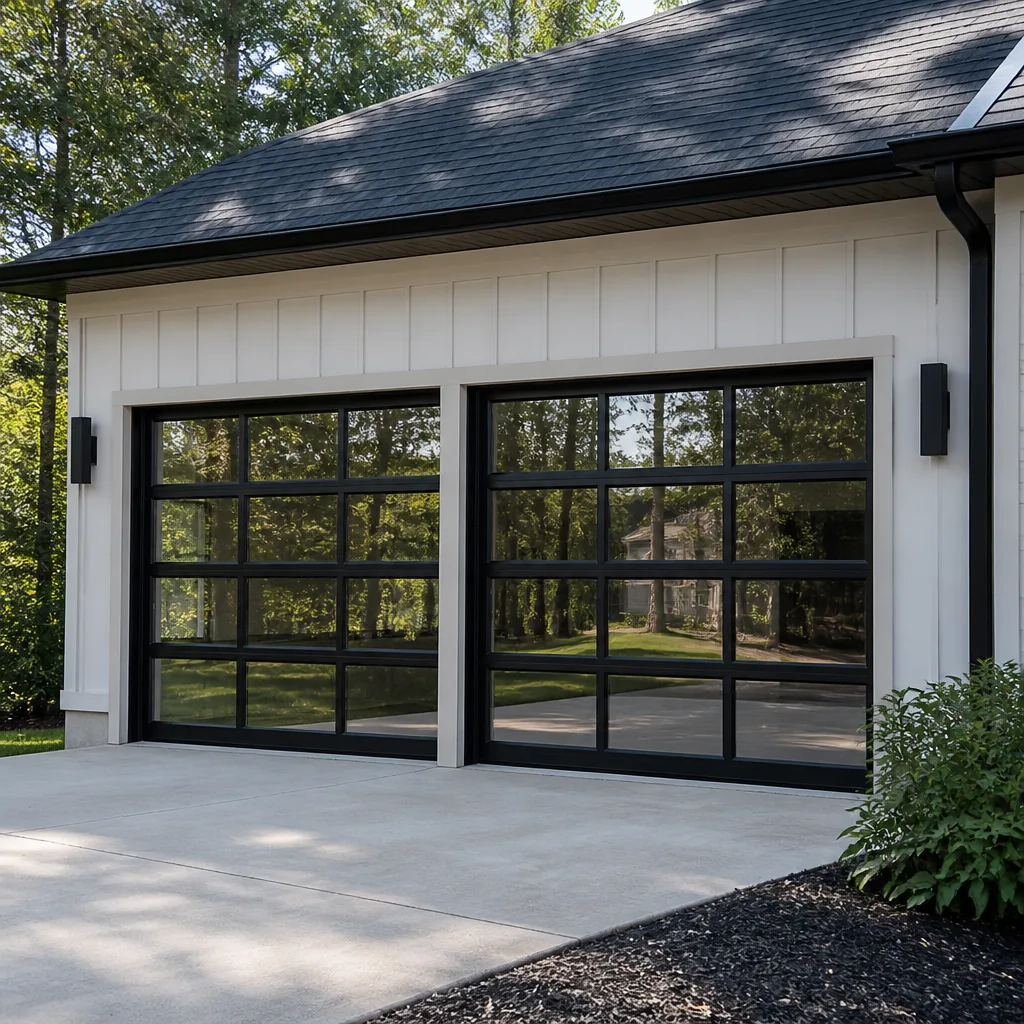 Full-view glass
 LiftMaster openers
 Chamberlain openers
Full 25-point door and opener safety check with every visit - springs, cables, rollers, tracks, and your LiftMaster or Chamberlain opener included
You get a price before we start. It does not change when the pro arrives.
Get your free estimateHow to Hire a Garage Door Contractor in Cary: A Step-by-Step Guide
Most homeowners start their search for a garage door company by asking whether the contractor is licensed. It’s the right instinct, but it’s aimed at the wrong target. North Carolina doesn’t issue a state-level garage door contractor license, so the credential you’re looking for doesn’t exist in the form you expect. That single fact reframes the whole hiring process. The question isn’t who holds a license and who doesn’t. It’s who can actually diagnose and repair the door and opener you already own, and who’s going to show up selling whatever brand pays them the best margin. This guide teaches you the five interview questions that separate real technicians from salespeople in work shirts, plus the red flags we see most often in the Cary market.
Quick Answer
Hiring a garage door contractor in Cary comes down to asking five questions before anyone touches your door: can you name the brand and model of my current system, will you diagnose before quoting, do you service both the door and the opener, what does your written warranty actually cover, and what’s the total price in writing before work begins. A company that answers all five clearly, without hedging or redirecting toward a full replacement, is worth hiring. One that dodges any of them isn’t.
Styles & brands we work with
- Raised-panel steel
- Carriage house
- Modern flush
- Full-view glass
- LiftMaster openers
- Chamberlain openers
Table of Contents
- What North Carolina Actually Requires of Garage Door Contractors
- The Five Interview Questions That Reveal a Real Technician
- Red Flags Specific to the Cary Market
- How to Compare Garage Door Quotes Accurately
- What a Legitimate Parts and Labor Warranty Looks Like
- Repair vs. Replace: How to Know Which You Actually Need
- Cary’s Climate and What It Does to Your Garage Door
- The Parts You Should Never Touch Yourself
What North Carolina Actually Requires of Garage Door Contractors
North Carolina does not require a state-level garage door contractor license. Garage door installation and repair fall outside the scope of the state licensing board that governs general contractors, electrical, and plumbing trades. That’s not a loophole; it’s simply how the trade is classified. It also means the barrier to entry is low. Someone can print a logo on a shirt, rent a van for the day, and invoice you for a spring replacement without ever having been tested, certified, or insured.
What this means practically is that the usual credential shorthand doesn’t help you in Cary. “Licensed and insured” is a phrase any company can print on a website. You need to verify it, not just read it. Here’s what you can actually check:
- General liability insurance: Ask for a certificate of insurance and confirm it’s current. A legitimate company can produce one on request without flinching.
- Workers’ compensation: If the company has employees, ask whether they’re covered. If a technician is injured on your property and the company isn’t covered, the liability can land on you.
- Manufacturer training: Brands like LiftMaster, Chamberlain, Genie, Clopay, Amarr, Wayne Dalton, Craftsman, and Raynor offer product-specific training. A company trained on multiple brands can tell you what it knows and where its limits are.
- Written estimates: The written quote is the real credential. A company that won’t put the scope and price on paper before starting isn’t one you want on your property.
The absence of a state license doesn’t mean you can’t hire well. It means the vetting burden sits with you, and the questions in the next section are how you carry it. When you’re ready to compare options in Cary, start with companies that volunteer this information rather than making you pull it out of them.
The Five Interview Questions That Reveal a Real Technician
The difference between a technician and a salesperson is whether they can work on what you have or only sell what they prefer. These five questions surface that difference fast, usually within the first phone call. Ask them before you schedule anyone. A real technician answers them directly. A salesperson redirects.
-
“Can you name the brand and model of my current door and opener?” This is the test question. A technician who works on multiple brands will ask you to read the label on the opener housing or the door panel and then tell you what they know about it. Someone who only sells one brand will usually say “we’d have to come out and see” and then recommend a replacement once they arrive. If you say “I have a Genie opener and a Wayne Dalton door” and the response is “we don’t really work on those,” that tells you everything.
-
“Will you diagnose before quoting?” The right answer is yes, and the diagnosis comes before any number. A company that quotes a price before a technician has looked at the door is guessing, and guesses get revised upward once the door is open. A proper diagnosis identifies whether the problem is the spring, the cable, the track, the roller, the opener logic board, or the safety sensor. Each of those has a different fix.
-
“Do you service both the door and the opener?” Many smaller shops handle one or the other. A door that won’t move might be a mechanical failure in the door system itself, or it might be an opener that’s stopped responding. If the company only handles one side, you’re paying a second company to diagnose the same symptom. One call should cover both.
-
“What does your warranty cover, specifically?” “Lifetime warranty” means nothing without detail. Ask what’s covered on parts, what’s covered on labor, how long each lasts, and what voids the coverage. A real answer names specific parts and specific timeframes. A vague answer is a warranty designed to expire before you need it.
-
“What’s the total price in writing before work begins?” Not an estimate. Not a range. A written price that covers parts, labor, and any other charges, agreed before anyone opens a toolbox. The written quote is the price. If the number changes after the work starts, the company should show you why and get your agreement before proceeding.
Ask all five. The answers will tell you within ten minutes whether you’re dealing with a technician or a closer.
Red Flags Specific to the Cary Market
Cary’s housing stock ranges from newer builds in neighborhoods like Amberly and Carpenter Village to established homes in Preston and Lochmere, and the garage door systems vary just as widely. That variety creates specific opportunities for companies to upsell or cut corners. These are the patterns we see most often when homeowners call us after a bad experience.
- Vague dispatch windows. “Sometime this afternoon” or “between 8 and 5” costs you a day of waiting. A company that can’t give you a real window doesn’t have real scheduling. The issue isn’t just courtesy; it’s that a company without scheduling discipline often doesn’t have the parts or technicians to complete the job once they arrive.
- No written quote before work. If a technician starts work and then tells you the price, you’ve lost all leverage. The price should be agreed before the first screw is turned. This is the single most important red flag.
- Pushing full replacement over compatible repair. A door with a broken spring does not need a new door. An opener with a failed logic board does not need a new opener system. If the recommendation is replacement before diagnosis, ask why. If the answer is “it’s older, you’d be better off,” ask for the specific failure that justifies it.
- Brand steering. If a company only carries one brand, they’ll recommend that brand regardless of what you have. This is the single-brand pusher pattern. A brand-agnostic approach matches the fix to your existing system first.
- Service fees that appear only on the final invoice. Ask upfront whether there’s a service call fee, a diagnostic fee, or a trip charge. If the company can’t tell you before showing up, that’s a red flag. The estimate should be free and the price should be set by the written quote.
- Warranty language that expires before anything goes wrong. “90 days on labor, parts covered by manufacturer” is a real warranty. “Lifetime” with no named parts or timeframes is marketing copy.
How to Compare Garage Door Quotes Accurately
Comparing quotes from different companies is harder than it looks because they itemize differently. One company bundles labor into the part price. Another separates them. A third adds a service fee on top. If you compare the bottom-line numbers without looking at what’s included, you’ll pick the cheapest quote and often get the most expensive job. Here’s how to compare apples to apples.
Ask each company to break the quote into four lines: parts, labor, any service or trip fee, and total. Then compare line by line, not just on the total. A quote with a low total and a service fee is often more expensive than a quote with a higher total and no fee. A quote that lists a generic “spring replacement” without specifying whether it’s one spring or a matched pair is telling you something important: springs are usually replaced in pairs, and a quote for one spring when the door needs two is not a complete quote.
Request the quote in writing and confirm it includes:
- The specific part or parts being replaced, by name and size where applicable
- The labor to install them
- Any additional charges (service call, disposal, hardware)
- The warranty terms for parts and for labor separately
- The total price, stated as the price
When you compare quotes side by side this way, the cheapest quote is rarely the cheapest job. The written estimate sets the final price, so get it in writing before work begins. For more detail on what individual repairs typically run in this market, see our garage door repair page, which breaks down common jobs and what drives the cost. If the issue is the opener rather than the door, garage door opener repair covers the electrical side separately.
What a Legitimate Parts and Labor Warranty Looks Like
A legitimate warranty names specific parts, specific timeframes, and the conditions that void coverage. Anything less is marketing. When you ask about warranty during the hiring process, listen for these markers.
First, parts and labor should be covered separately, with a different timeframe for each. Labor coverage is usually shorter than parts coverage because the manufacturer typically stands behind the part while the company stands behind the install. If a company quotes only one number and calls it the warranty, ask them to split it. Second, the warranty should specify what’s covered: springs, cables, rollers, hinges, panels, opener components, and so on. A warranty that says “covers defects” without naming what counts as a defect isn’t a warranty you can use. Third, it should state what voids it. Common void conditions include unauthorized repairs by another party, damage from impact (a car hitting the door), and modifications to the system.
Red flags in warranty language:
- “Lifetime warranty” with no named parts or timeframes
- Labor coverage that lasts only a few weeks while parts coverage is much longer
- Warranty voided by “normal wear” without defining what counts as normal wear
- No written warranty document, only a verbal promise
- Coverage that applies only if you use the company for all future service
Ask for the warranty in writing before work begins, and read it alongside the quote. A company confident in its work will hand it over without hesitation. For a broader view of how the repair side of the business handles warranty questions, see our Cary Garage Door Service overview page.
Repair vs. Replace: How to Know Which You Actually Need
Most garage door problems are repairable. Doors are mechanical systems with a finite set of failure points, and nearly all of them can be fixed without replacing the door. The push toward replacement usually comes from the sales side, not the diagnostic side. Here’s how to tell the difference.
A repair assessment should start with a specific diagnosis: what part failed, why it failed, and what the fix is. If the diagnosis is clear and the fix is a single part, repair is almost always the answer. Common repairable failures include:
- Broken torsion or extension spring (the most common failure)
- Frayed or snapped lift cable
- Bent or misaligned track
- Worn rollers, hinges, or bearings
- Failed opener logic board, capacitor, or gear assembly
- Misaligned or blocked safety sensors
- Worn weather seal or bottom rubber
Replacement starts to make sense when the door itself has structural damage (a cracked or delaminated panel that can’t be sourced), when the door is so out of alignment that multiple components are failing at once, or when you’re upgrading for reasons other than failure. Even then, the decision should come after a clear diagnosis, not before one.
If your door is a Clopay or Amarr model, replacement panels are usually available. If it’s an older Wayne Dalton or a discontinued model, panel sourcing can be harder, but a good technician will tell you that directly rather than using it as a reason to sell you a whole new door. Our technicians have up to 10 years of experience across eight major brands, and the diagnostic approach is the same regardless of brand: figure out what failed, then fix it.
Cary’s Climate and What It Does to Your Garage Door
Cary’s climate is a real factor in garage door wear, even though it’s not the first thing homeowners think about. The region sees hot, humid summers and occasional freezing temperatures in winter, and that combination works on the door system in ways that are easy to miss until something fails.
Humidity is the bigger long-term factor. Wood components, if you have them, swell and contract with seasonal moisture changes. Steel doors can rust at the bottom edge where moisture collects. Springs, which are under constant tension, are affected less by humidity than by temperature swings. A torsion spring that’s nearing the end of its cycle life is more likely to snap during a cold snap, when metal contracts and the tension load shifts. Cable wear accelerates in the same conditions. Rollers and hinges dry out over time and benefit from periodic lubrication.
What this means for hiring in Cary is that you want a company that asks about the door’s age and service history, not one that shows up, looks at the door for thirty seconds, and recommends a new opener. The seasonal pattern here is predictable, and a technician familiar with the local climate will recognize the signs. If your door is getting harder to lift, is making new noises as the seasons change, or is starting to stick in cold weather, those are signals to have it looked at before a failure strands a car. For the city-specific service context, the Cary page covers how service calls are handled locally.
The Parts You Should Never Touch Yourself
Some garage door maintenance is safe and worth doing. Lubricating rollers and hinges, tightening the bolts on the track brackets, and clearing debris from the photo-eye sensors are straightforward tasks. Other parts are genuinely dangerous, and no amount of online instruction changes that.
Torsion springs and lift cables are under extreme tension at all times. A torsion spring that’s under load can cause serious injury if it releases while you’re working on it. Cables can snap with enough force to cut. The winding bars used to adjust spring tension can slip and cause hand and arm injuries. There’s no safe way to learn this on the job, and no DIY video makes it safe. The same applies to the electrical side of the opener: the high-voltage wiring that feeds the opener should be handled by someone trained to work with it.
A trained technician has the tools and the procedure to release tension safely before working on springs and cables. That’s the entire reason this part of the trade exists as a specialty. If your door has a broken spring, a snapped cable, or an opener that’s tripping a breaker, call a professional rather than attempting the repair. It’s not a matter of skill. It’s a matter of safety.
Common Mistakes to Avoid
- Hiring on price alone. The lowest quote is often the most expensive job because it leaves out parts, labor, or warranty. Compare line by line, not on the bottom-line total. In Cary’s market, the companies with the lowest headline prices are often the ones with the most add-on fees.
- Accepting a verbal quote. A verbal price is not a price. It’s an opening position. The written estimate is the price, and you should have it before work starts. If a technician resists putting it in writing, that’s your answer about whether to hire them.
- Letting a single-brand company choose your repair. If the company only sells one brand, their recommendation will reflect that. Ask for a diagnosis of what failed, then decide. A brand-agnostic company will tell you what you need, not what they prefer to install.
- Skipping the opener in the assessment. Many garage door “failures” are actually opener failures. If the technician only looks at the door and not the opener, you may be paying to fix the wrong thing. One call should cover both.
- Ignoring the warranty until after the work. Ask for the warranty in writing and read it before you agree to the quote. Warranty language that sounds good in conversation often looks very different on paper.
- Assuming a new door is the answer. Most failures are single-part repairs. If the recommendation is replacement before any diagnosis has happened, get a second opinion. The door you have is almost always repairable.
- Not asking about the service fee. A service call fee that only appears on the invoice is a red flag. Ask upfront whether there’s a diagnostic or trip charge, and get the answer in writing.
See the difference
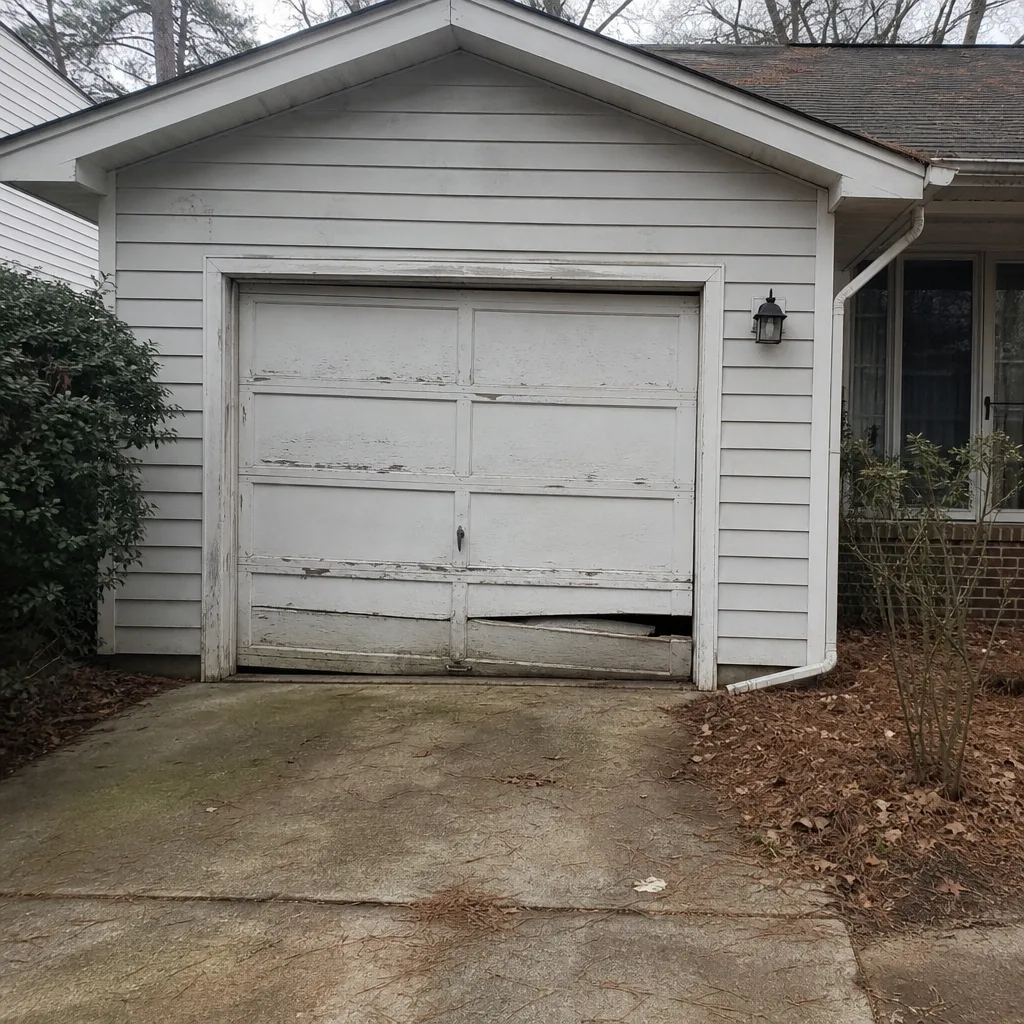 Before
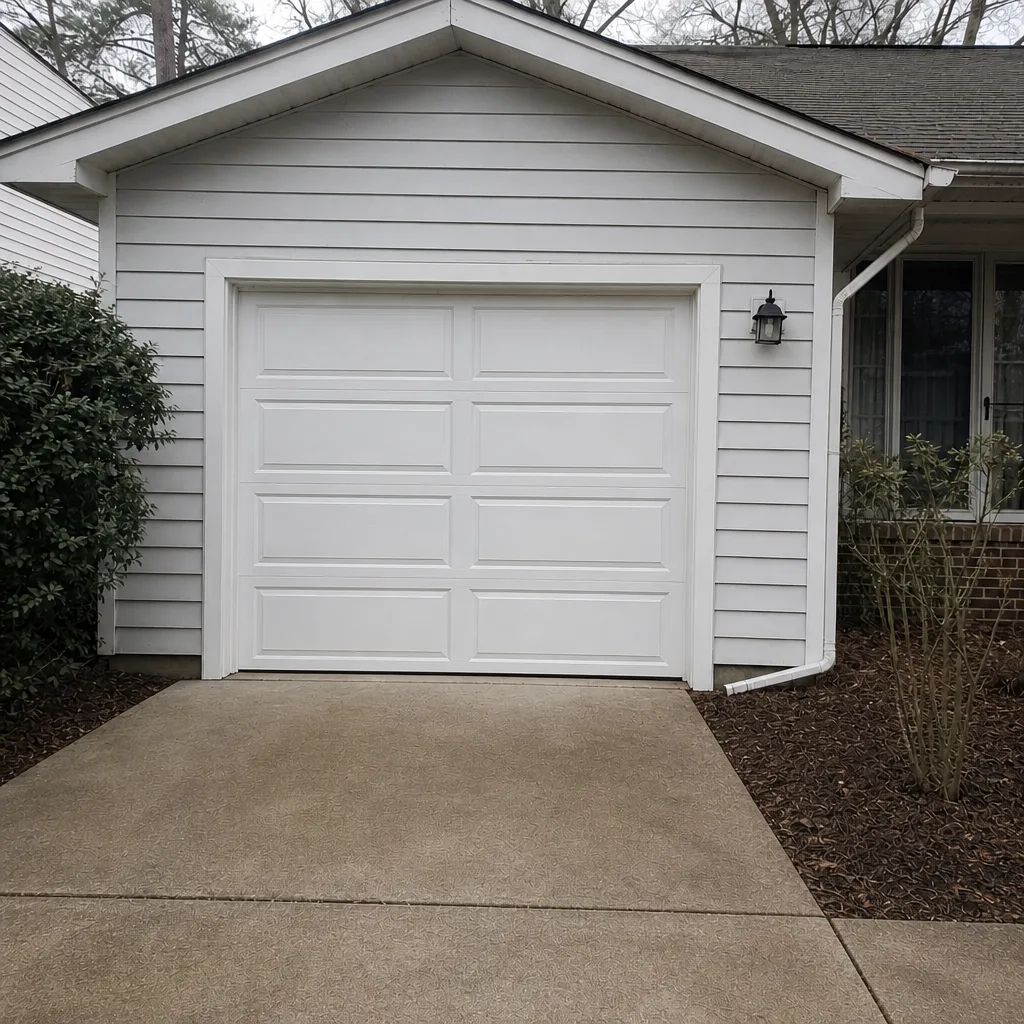 After
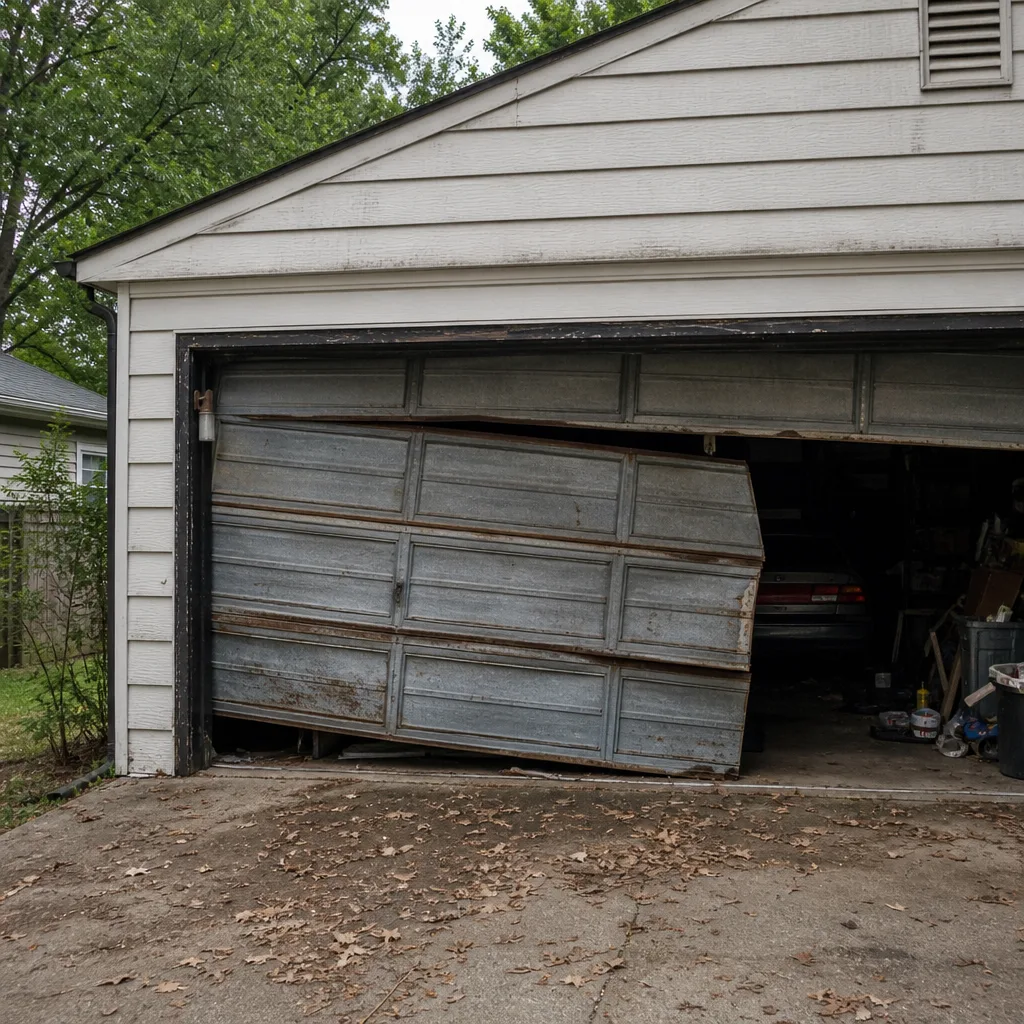 Before
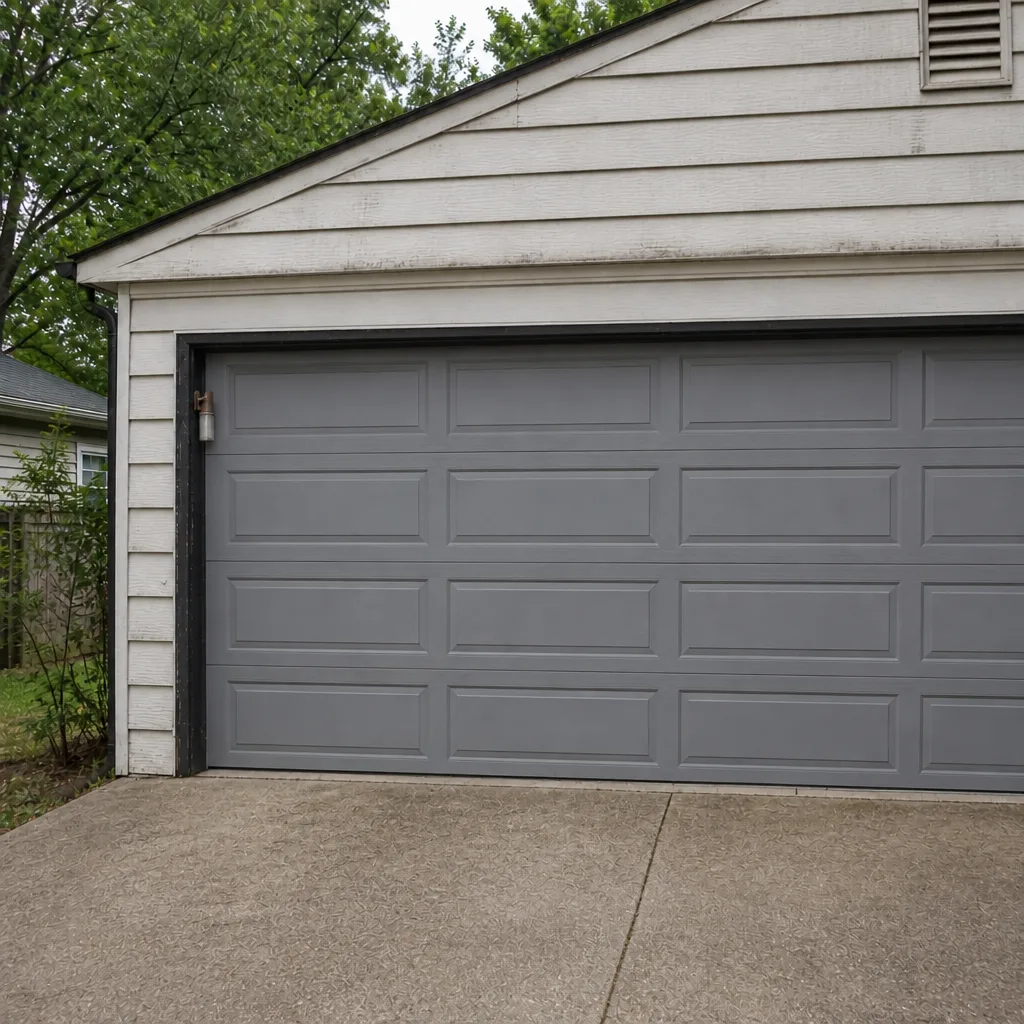 After
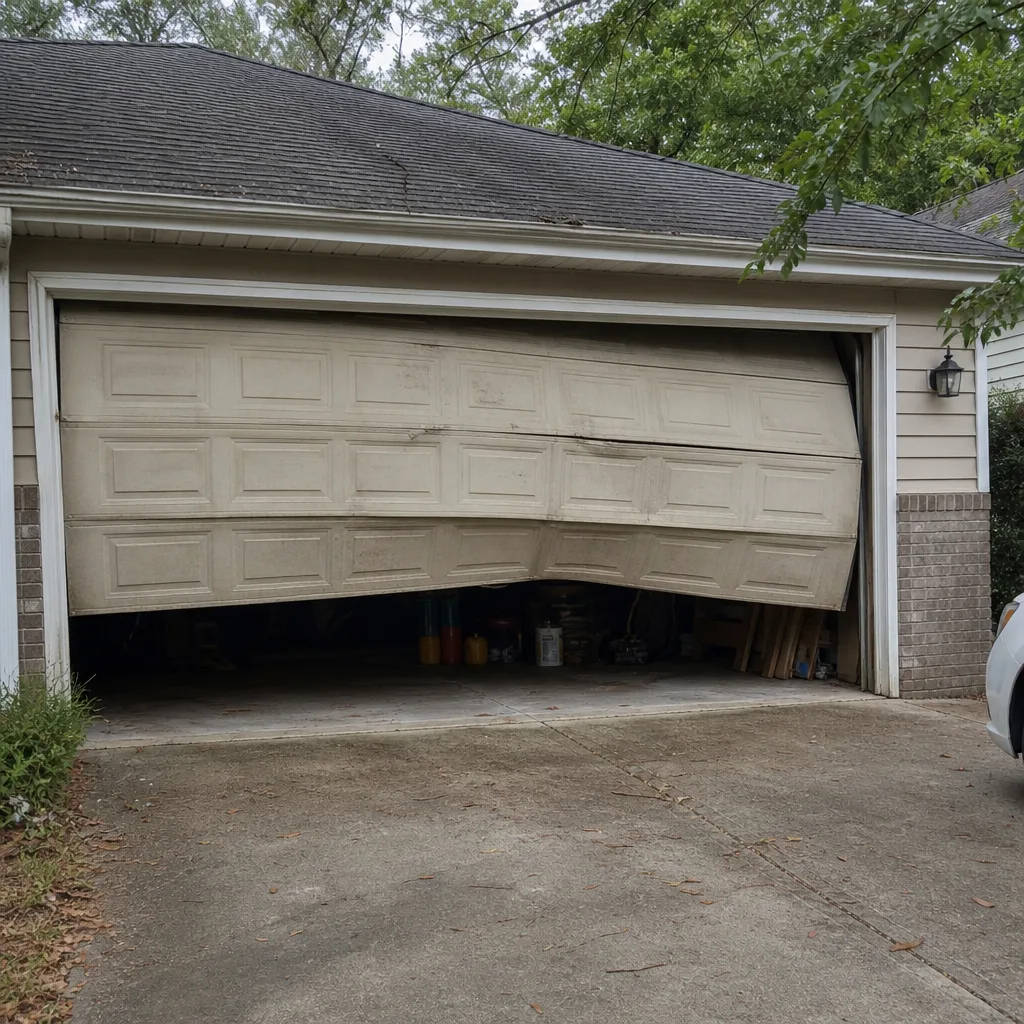 Before
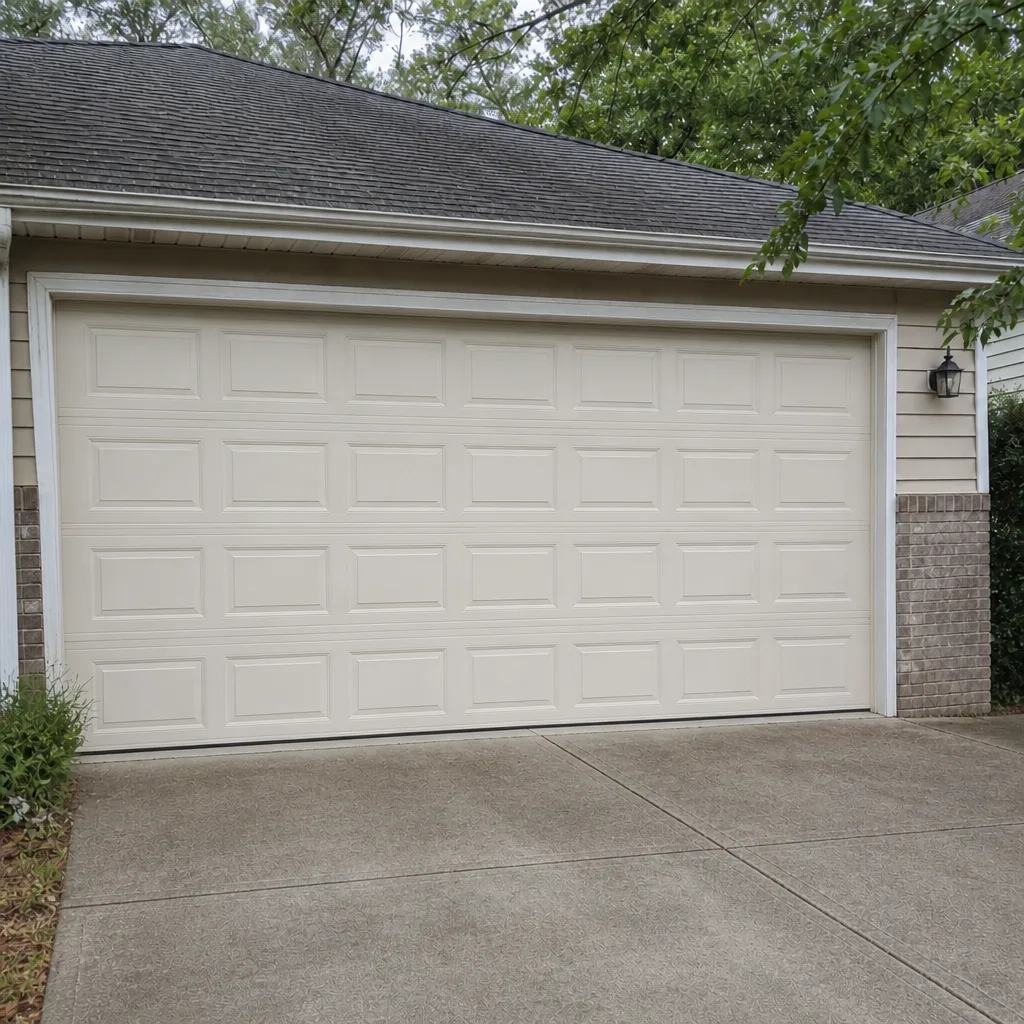 After
When to Call a Professional
Call a professional for anything involving spring tension, cable replacement, opener electrical work, or a door that’s come off its track. Those are the situations where the risk of injury outweighs any savings from a DIY attempt. Call when your door won’t open or close at all, when it’s making grinding or snapping noises, when it reverses before hitting the floor, or when the opener runs but the door doesn’t move. Call when you’re not sure what’s wrong, because a diagnosis is the first step and it’s better to know than to guess.
Cary Garage Door Service offers free estimates in Cary. Call (855) 360-7403. We answer 24/7. Fast dispatch from 7am to 7pm, Sunday through Friday. Every job comes with a written quote agreed before work begins, and we work on the brand you already have. Whether it’s a Genie opener or a Clopay door, the goal is to get it back up and running, not to sell you a replacement you don’t need.
Frequently Asked Questions
No. North Carolina does not require a state-level garage door contractor license, so there’s no state license to check. What you should verify instead is current general liability insurance, workers’ compensation coverage if the company has employees, manufacturer training on the brands you own, and a written estimate before work begins. Those four things tell you more about a company than a license number would.
It depends on the part that failed and whether it’s a single-spring or matched-pair replacement, which opener components are involved, and whether the track or cables need work. The written estimate is the price, and it’s set before work starts. Call (855) 360-7403 for an exact quote; estimates are free.
For repair calls, same-day service is often possible. Fast dispatch runs from 7am to 7pm, Sunday through Friday, and we’re closed Saturday. A call outside dispatch hours is booked into the next opening, Sunday through Friday, 7am to 7pm. For new door installation, the work is measured and scheduled rather than same-day. Call (855) 360-7403 to check the schedule.
No, not without your agreement. The written quote is the price, and it’s agreed before any work begins. If a technician discovers something not covered in the original diagnosis, they should show you what they found and get your approval before proceeding. You shouldn’t see a different number on the invoice than the one on the quote. Call (855) 360-7403 for an exact quote; estimates are free.
North Carolina doesn’t issue a state-level garage door contractor license, so “licensed” isn’t the right question here. What we can confirm is that the technicians are experienced, trained on your brand, and work under insurance coverage and a written warranty. Ask any company you’re considering for their certificate of insurance before booking, and expect them to provide it without hesitation.
Yes. We’re trained across eight major garage door and opener brands, including Genie, Clopay, Amarr, and Wayne Dalton, along with LiftMaster, Chamberlain, Craftsman, and Raynor. The approach is to diagnose what failed on your existing system and fix it, not to steer you toward a brand we prefer. Whether it’s a Genie opener that won’t respond or a Clopay door off its track, one call covers both the door and the opener.
The Bottom Line
Hiring a garage door contractor in Cary is less about credentials and more about questions. North Carolina doesn’t issue a state garage door license, so the vetting is on you, and the five questions in this guide do the work a license check can’t. Ask for a diagnosis before a quote. Ask whether the company services both the door and the opener. Ask for the warranty in writing and read it. Ask for the total price before work begins. Companies that answer all five clearly, without pushing a replacement or steering you toward a brand, are the ones worth hiring. For a free estimate in Cary, call (855) 360-7403.
Written by the team at Cary Garage Door Service.